
Is Turkey a difficult market or is it just a "different" one : A study on Turkish beverage market

Most markets reward the same things: brand equity, distribution scale, and price positioning backed by consumer research. Enter with those in order, and the outcomes are reasonably predictable.

Turkey is not a difficult market. It is just a different one. Foreing companies should complement th 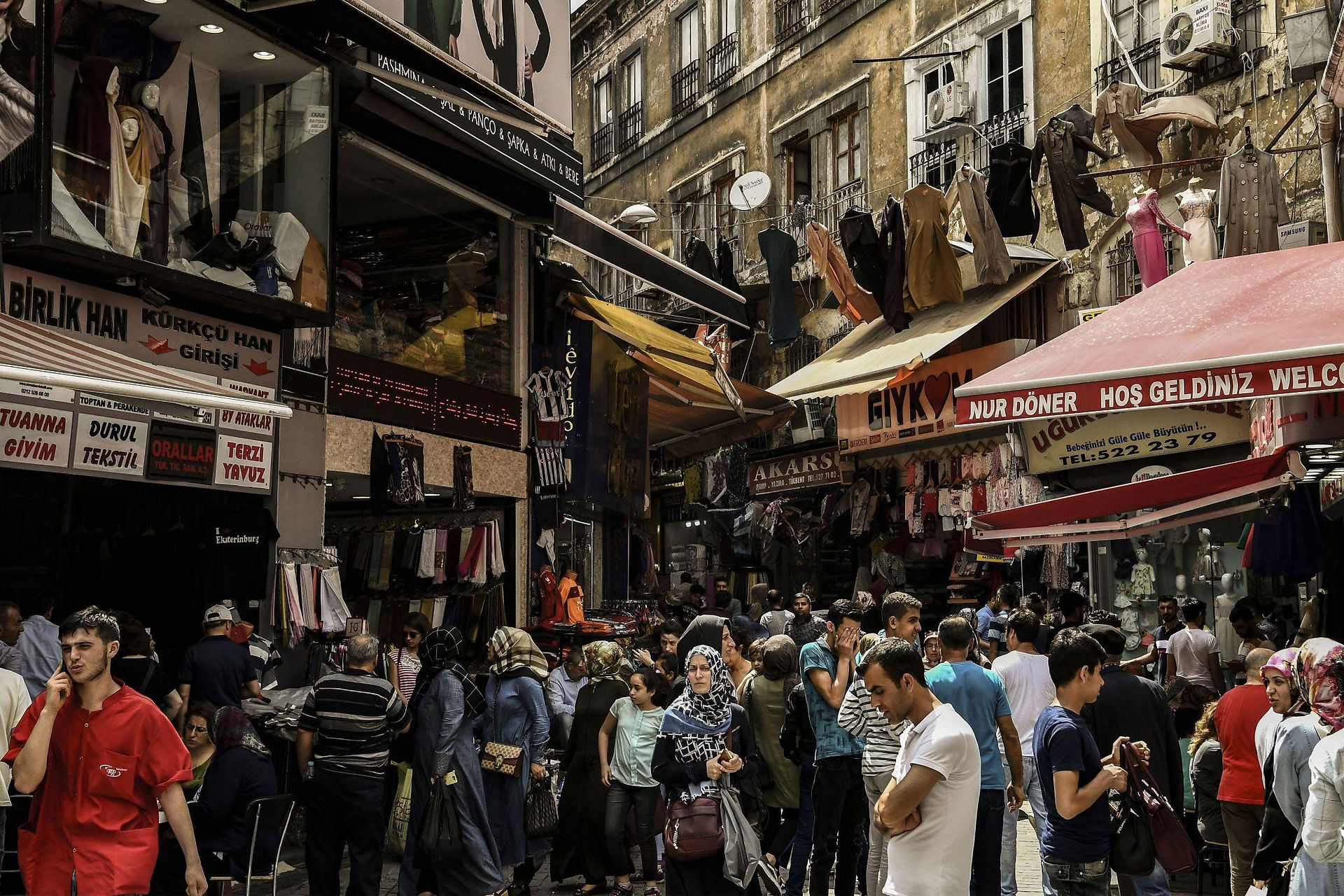
Ayran is leading Turkish beverage market
Turkey rewards those things too; but not reliably, not linearly, and not in isolation from a set of local dynamics that standard market entry frameworks tend to underestimate. The consumer here is emotionally engaged, culturally rooted, and responsive to macro signals in ways that do not map neatly onto behaviour in other markets. Preference shifts that elsewhere would take years can happen in a single quarter. Loyalties that look durable on paper can dissolve when the economic or political environment shifts and in Turkey, it shifts.
Turkey is one of the most dynamic consumer economies in the region, with a young population, deep urban density, and genuine appetite for both global and local products. Turkish Statistical Institute data shows that Turkey’s population is over 85 million and According to World Bank, over 50% of the population is under 35, indicating a structurally young consumer base. McKinsey & Company analyses point to Turkey as a market where aspiration toward global brands coexists with trust and price-value alignment in local brands, driven by cultural proximity and economic considerations. But it is a market where the gap between arriving and understanding tends to be wider than international companies expect and where that gap has a measurable cost.
The beverage sector illustrates this particularly well. Two examples are worth examining in detail.
The Boycott Effect: From Negligible to Double Digits

Not long ago, Turkish cola alternatives occupied a rounding error in market share data. The boycott of certain international brands changed that.
What happened next was not simply a temporary volume transfer. Consumers who switched to local alternatives discovered that the experience was acceptable — in many cases, good enough. Local cola brands moved from negligible share to above ten percent of their segment in a relatively short period.
Coca-Cola’s share of the Turkish sparkling beverages market declined from 59% to 54%, according to company data, with analysts explicitly linking this drop to boycott activity.
This is not a story about political behaviour driving purchasing decisions, though that was the catalyst. It is a story about what happens when a large population of emotionally engaged consumers is given a structural reason to try something they had previously passed over without consideration. Once tried and found acceptable, the barrier to re-selection in future purchases drops significantly.
For international brands, the lesson is not that boycotts are unpredictable they are. The deeper lesson is that the assumed loyalty gap between an international brand and a local alternative was always thinner than the numbers suggested. The boycott revealed it; it did not create it. In a market where consumer sentiment can shift fast and far, that thinness matters.
Ayran: The Category That Defies the Logic of Global Scale

Coca-Cola and PepsiCo have between them the largest distribution networks, the deepest marketing budgets, and the broadest consumer research capabilities in the beverage world. Both are active in Turkey. Neither of them is the most consumed non-alcoholic beverage in Turkey's restaurant and café sector.
That distinction belongs to ayran.
Ayran is a yoghurt-based drink with no international brand behind it, no global marketing campaign, and no aspirational positioning. It wins on a combination of factors that global product development cycles are not designed to replicate: low cost, deep cultural familiarity, a strong health perception in the local market, genuine flavour compatibility with Turkish food, and near-universal availability. It is on every menu because consumers expect it to be, and consumers expect it because it always has been.
Academic research on beverage consumption in Turkey shows that ayran is one of the most preferred drinks alongside meals, often ranked alongside tea as a dominant everyday beverage choice. Studies on consumption patterns indicate that Turkish consumers frequently choose ayran specifically as a meal companion, while carbonated soft drinks are more situational or preference-driven. Ayran is widely described as a default accompaniment to traditional foods such as kebab, döner, and pide, making it structurally embedded in foodservice consumption behavior rather than occasional consumption.
This is a category where the logic of competitive advantage by scale simply does not apply. No amount of distribution investment by a multinational will shift what ayran means to a consumer eating a plate of kebab. The product's relationship with its context is not addressable by marketing. It is cultural infrastructure.
For international entrants assessing adjacent categories; dairy-based beverages, functional drinks, fermented products; ayran offers a reference point worth studying. Consumer attachment in Turkey can be rooted in factors that predate and outlast any brand campaign. Scale does not dissolve those attachments. It tends to make them more visible.
Why Standard Analysis Keeps Getting Turkey Wrong
Both examples ; the boycott effect and ayran’s continued dominance reflect a structural characteristic of the Turkish market: outcomes are often harder to predict with precision using standard models.
Consumer behaviour is highly responsive to macroeconomic conditions such as inflation and income pressure, as well as to social and cultural signals. These factors interact with category dynamics in ways that are not always linear.
Under economic pressure, consumers may shift away from preferred international brands, not necessarily because preferences change, but because those preferences become less affordable to act on. Social or political signals can further accelerate such shifts.
At the same time, culturally embedded products such as ayran in meal consumption tend to be highly resilient within their context.
The result is a market where brand hierarchies exist but can shift more rapidly than expected, and where external triggers can amplify underlying economic trends.
This does not reflect irrationality, but rather a multi-layered form of consumer rationality shaped by economic constraints, cultural norms, and social context.
What This Means in Practice
None of this suggests that Turkey is an impossible market. It suggests something more specific: the assumptions that protect market share in more stable consumer environments tend to offer less protection in a more volatile context.
In Turkey, the knowledge that compensates for this is inherently local. Brands that have performed well over time typically treat local consumer behaviour as distinct, rather than as a simple extension of a global or regional profile. They also maintain the operational flexibility required to respond to rapid market shifts.
In many cases, they complement their internal capabilities with strong local insight, recognising that familiarity with the market including relationships, cultural context, and on-the-ground judgment plays a significant role in execution.
By contrast, companies that struggle often overestimate the durability of their initial market position. In Turkey, resilience is less a property of where a brand starts, and more a function of the consistency and adaptability of the work required to sustain that position.
This is not something that can be fully managed from a global headquarters alone; it requires a combination of central strategy and strong local interpretation.


Comments